What Are 30 Tier List Ideas for Your Next Ranking?
Choose from 30 focused tier list ideas for games, films, television, food, music, sports, travel, and group activities, with a clear rule for each.
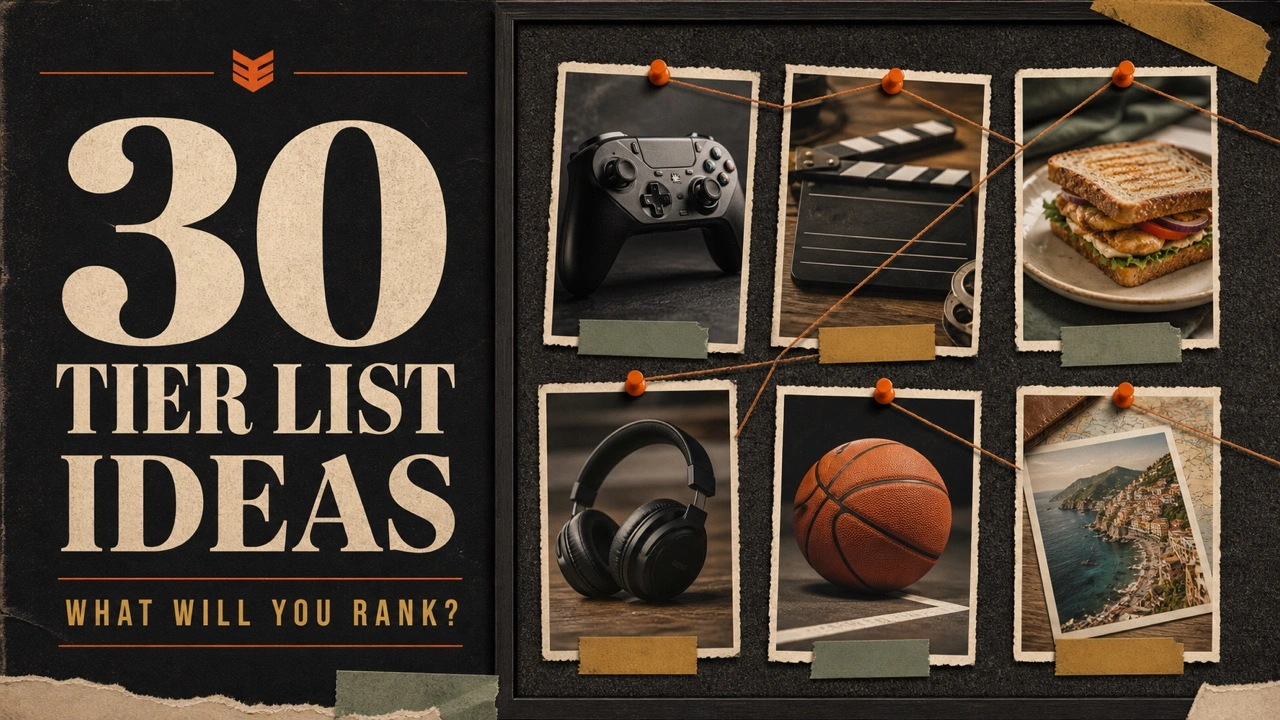
A strong tier list topic gives every item a fair comparison and gives every row a clear meaning. Broad subjects can work, but focused sets usually lead to better decisions and a board people can understand without a long explanation.
The ranking rule matters as much as the topic. The same group of games could be ranked by quality, difficulty, beginner value, replay value, or personal preference. Pick one rule before adding the first item.
These 30 tier list ideas cover six useful categories. Each idea includes a suggested angle so you can move from a blank board to a specific ranking question.
What makes a good tier list idea?
A good idea has a recognizable item group, one shared standard, and enough choices to create meaningful rows. “Games” is too open for most lists. “Co-op games our group finished, ranked by teamwork” gives the board a useful boundary.
The topic should also fit the audience. A private group can rank inside jokes because everyone has the needed context. A public list needs names, images, and labels that a new reader can understand.
Which gaming tier list ideas work well?
- Playable characters by beginner value. Compare how quickly each character becomes useful, how forgiving the controls feel, and how many situations the character can handle.
- Weapons by all-round performance. Rank damage, range, speed, reliability, and ease of use under one combined rule that fits the game mode.
- Maps by match quality. Judge layout clarity, fair starting positions, route choice, pacing, and the number of repeated matches the map can support.
- Boss fights by design. Compare readable attacks, challenge, arena design, music, fairness, and how well each fight uses the game's main systems.
- Games in your backlog by priority. Use play length, current interest, group availability, and access to decide which title should be started first.
Gaming topics benefit from a clear version or date when balance changes can move items. A character list for one update may not match the next update. Put the game mode and version in the title when those details affect the ranking.
Which film and television tier list ideas work well?
- Films in one franchise by rewatch value. Rank pacing, memorable scenes, character work, and how often you would choose each film again.
- Television seasons by consistency. Compare the full season without judging only the premiere or finale. Weak middle episodes should affect the result.
- Villains by effectiveness. Decide whether the scale measures power, writing, screen presence, or impact on the hero, then keep that rule steady.
- Opening scenes by first impression. Rank how quickly each opening sets the tone, introduces a conflict, and gives viewers a reason to continue.
- Animated films by family viewing value. Compare age range, clarity, humor, emotional weight, and how well the film holds up across repeat viewings.
Media rankings often mix personal enjoyment with technical judgment. Both are valid, but they belong in separate lists unless the title states how they are combined. “Our favorite seasons” is a preference list. “Seasons ranked by story consistency” makes a narrower claim.
Which food and drink tier list ideas work well?
- Fast-food fries by repeat order value. Compare taste, texture, portion, price, and how well the fries travel after leaving the restaurant.
- Pizza toppings by group appeal. Rank how easily each topping fits a shared order, then leave personal favorites for a separate list.
- Coffee orders by everyday value. Compare cost, preparation time, sweetness, caffeine, and how often you would choose the drink during a normal week.
- Regional snacks by first-time recommendation. Judge which products best represent the category and which ones a visitor should try first.
- Breakfast foods by weekday usefulness. Rank preparation time, cost, portability, fullness, and how well each choice fits a busy morning.
Food boards become easier to read when custom labels replace letter grades. “Order again,” “Good with the right meal,” “Only if discounted,” and “Skip” communicate a practical choice faster than S through D.
Which music tier list ideas work well?
- Studio albums by full-listen quality. Judge the complete sequence, weak tracks, flow, and the number of songs you would keep in regular rotation.
- Opening tracks by album setup. Compare how well each first song introduces the sound, mood, themes, and pace of the album that follows.
- Concert setlists by pacing. Rank openings, transitions, quiet sections, closing choices, and how well the set balances new and familiar songs.
- Film soundtracks by story support. Judge how well the music supports scenes, creates identity, and remains memorable outside the film.
- Music videos by concept execution. Compare visual idea, editing, performance, connection to the song, and how clearly the concept appears on screen.
Music rankings can become very personal. That is fine when the board says “favorite” or “most replayed.” A quality claim needs a defined standard, while a preference list only needs an honest point of view.
Which sports tier list ideas work well?
- Team logos by readability. Compare clear shape, color contrast, recognition at small size, and how well the mark works without a team name.
- Home uniforms by design. Rank color balance, number readability, connection to team identity, and how the uniform looks during play.
- Stadium food by value. Compare price, portion, speed, ease of eating in a seat, and whether the item feels specific to the venue.
- Famous comebacks by difficulty. Judge the size of the deficit, time remaining, opponent strength, pressure, and importance of the event.
- Venues by live experience. Compare sightlines, transport, entry, comfort, atmosphere, food, and how easy it is to follow the action.
Sports topics often need a season, league, or event limit. A logo history can cover several decades, while a performance list may apply only to the current season. State the period so older and newer evidence do not get mixed.
Which group and lifestyle tier list ideas work well?
- Weekend activities by group fit. Rank cost, travel time, booking effort, weather needs, and how many people can take part.
- Group trip ideas by practicality. Compare total cost, travel time, accommodation, accessibility, and the range of activities available.
- Study methods by subject fit. Rank flashcards, practice problems, summaries, teaching aloud, and timed review for one specific subject or exam.
- Desk upgrades by daily value. Compare cost, comfort, space used, setup effort, and how often each item improves real work.
- Gift ideas by recipient fit. Rank budget, usefulness, personal meaning, delivery time, and the chance that the item will be used.
Practical lists work best when the audience is named. A group trip for four adults has different limits from a family trip with young children. Add those limits to the title before ranking cost or convenience.
How many items should a tier list include?
The right number depends on how quickly readers can recognize each item. A board with ten detailed text labels may already feel full, while a character list can hold many small portraits that remain clear.
Start with the complete natural set without chasing a fixed number. If the board becomes crowded, split it by game, season, genre, price range, release period, or another boundary that preserves fair comparisons.
A series can be better than one oversized image. Separate album rankings by era or restaurant choices by menu category. Each result becomes easier to read and gives the audience a more specific question to discuss.
How do you choose tier labels for these ideas?
Use S through D when the audience already understands a best-to-worst scale. Use custom labels when the decision is practical. “Plan now,” “Maybe,” “Only nearby,” and “Skip” fit travel ideas better than grades.
Every label should answer the same question and follow an obvious order. Avoid mixing cost, quality, difficulty, and popularity as row names. Those are separate ranking rules and usually deserve separate boards.
Which idea should you rank first?
Choose a group you know well enough to explain. A clear reason behind each placement matters more than a large item count. Add the set to the free tier list maker, place the easy choices first, and use direct comparisons for the middle.
The best starting idea is the one with a defined audience, one ranking rule, and a complete item set. Those three details give the finished board a purpose beyond the colored rows.